
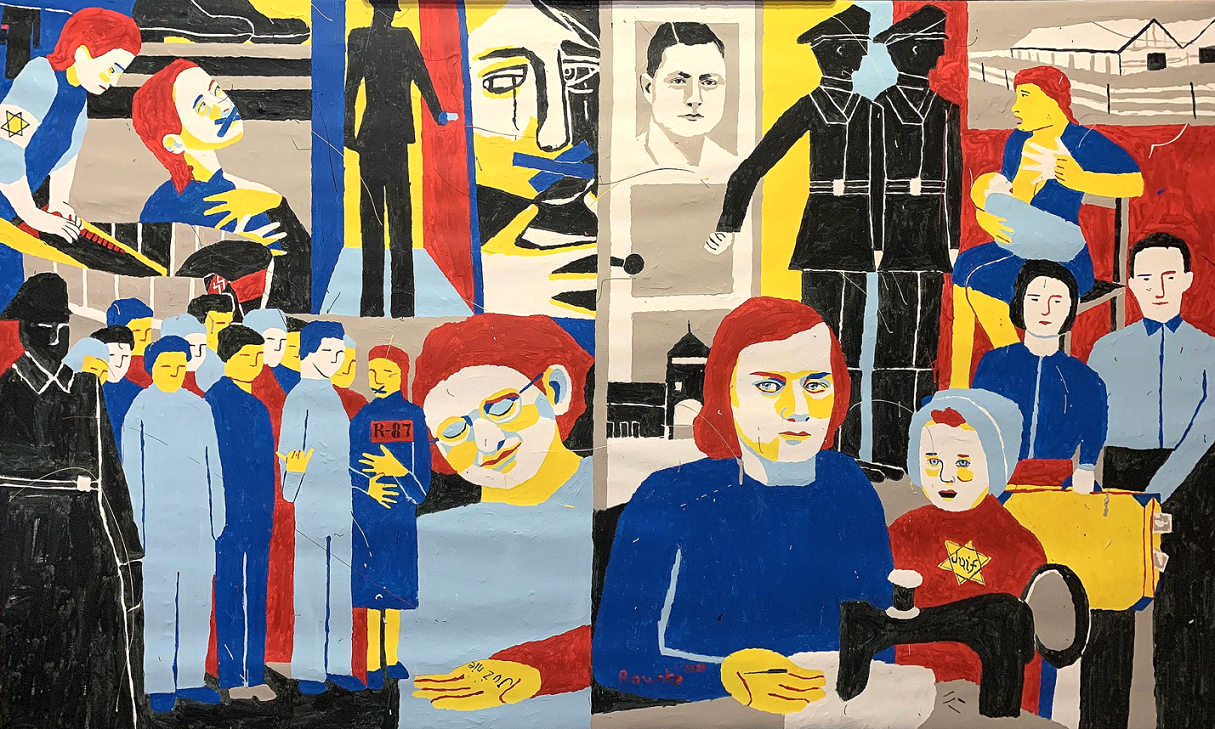
This painting shows two stories, one is about Doris Fedrid, a Deaf survivor from Poland. The other is Rose Steinberg Feld, a Deaf survivor from Pinsk, Russia.
In Doris Fedrid’s story, there are five scenes in the painting. Doris was in the Tarnopol Ghetto in Poland. Doris worked at the slave labor camp. She washed the Gestapo’s uniforms by hand, scrubbing in a tub. Her hands were very dry and painful. Her father gave her butter to relief her hands. She wore her outfit with a red tag and numbered “R-87” in black ink and was in appels (roll call) which was dangerous for Deaf people, Doris had to be signaled when her name was called. A person signed, “now” meaning her name was to be called and she was frightened, (her signs as “frightened or scared”). She remembered when her father cut a hole on a floor and placed a door on top and covered with a rug and the family hid underneath the basement. Nazi soldiers came and walked and that scared Doris and keeping quiet all the time. Doris hid behind the wall inside a bathroom and one of the Nazi soldiers walked in and Doris stood still and very scared. The older Doris looked at her palm and remembered her mother finger marked her palm, “juz nie”, meaning no more.
In Rose Steinberg Feld’s story, there are six scenes in the painting. Rose was in France during the war. Gestapo came to Max and Rose’s house while she was breastfeeding her baby girl, Ester. The soldiers knocked on the door and scared Rose. They took Max to Camp Beuve LaRolanda in Paris, France where he painted a picture of the camp on a postcard for Rose. He was later sent to Auschwitz-Birkenau extermination camp where he was deported and never returned. Max’s friends, a non-Jew Deaf couple, Marcel and Marcelle DeMany took care of Ester and hold all of Max’s and Rose’s photographs, jewelry and others in a suitcase. Rose worked at a fur factory, making uniforms for soldiers. She was to have only five needles a day. She broke four needles and had the last needle. If the fifth needle got broken, she would have been killed. The painting is owned by the Silesian Museum in Katowice, Poland.
Related products
-
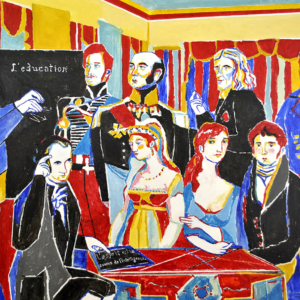
The Public Lecture, 1815.
$200.00 -
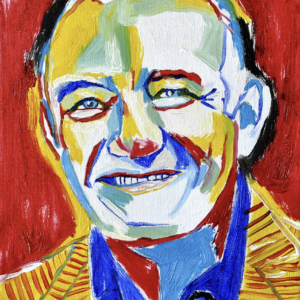
Robert Panara
$70.00 -
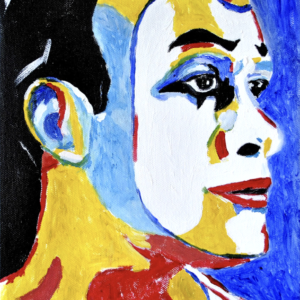
Bernard Bragg
$200.00
Reviews
There are no reviews yet.